Mobile games explained• 9 min read
Why are base-building mobile games bad?
The walls go up quickly. Then the game starts charging rent on your patience.

The short answer
Why are base-building mobile games bad? The building is usually not the problem. They feel bad when progress is designed around escalating timers, repetitive resource collection, paid speed-ups, daily obligations, and the threat of losing ground while you are away. Strategy becomes less important than returning on schedule or paying to skip the schedule.
A good base-building game asks what you want to construct. A frustrating one asks how long you are willing to wait for it.
The first hour can feel generous. Roads appear, workers stay busy, and every tap produces a small parade. Later, one upgrade occupies a builder for days while the shop quietly points at a faster route.
That change is not inevitable. Planning, scarcity, and delayed rewards can make strategy satisfying. The problem begins when the design creates inconvenience mainly so that relief can be sold back to you.
Base-building is a good game idea
Building a settlement turns abstract progress into something visible. You choose where resources go, decide which weakness matters first, and watch an empty patch become a system. A timer can give that decision weight. If every upgrade happened instantly, planning would collapse into frantic tapping.
The genre also works well on a phone. A player can collect resources, start a project, and leave. That rhythm suits short sessions better than a battle that demands forty uninterrupted minutes. Waiting is therefore not evidence that a game is bad. It becomes a problem when the wait stops supporting a decision and starts replacing one.
Ask what remains after you press the build button. Can you rearrange the base, explore, fight, trade, or solve another problem? Or has the game closed every useful door until a clock finishes? In the second case, the activity is no longer building. It is checking whether a number has reached zero.
The timer stops measuring progress and starts controlling it
Early upgrades often finish quickly because the game is teaching its loop. The sound plays, the roof appears, and the next objective is ready before you have decided whether you like the first one. Later upgrades can take hours or days. By then, leaving feels like abandoning work rather than simply closing an app.
A Trimbos Institute report on behavioural design in games uses Clash of Clans as an example. It describes building times growing from seconds to many days, with premium currency available to shorten the wait. The report calls this a temporal pattern that can be overcome through payment.
That distinction matters. A meaningful delay asks you to choose what should happen first. A monetized delay makes the obvious choice, then charges for impatience. The builder has not become more strategic. He has apparently joined a union with an unusually expensive overtime policy.
A timer serves the game when it makes a decision matter. The game serves the timer when waiting is the main obstacle and payment is the main answer.
Grinding can make a strategy game feel like unpaid admin
A base needs resources, so repetition has a legitimate role. The problem is repetition without a new decision. Collecting the same material from the same building for the same upgrade does not become deeper because the required number added another zero.
Researchers describe this as grinding when repeated mechanics are required to make progress. The 2024 paper Level Up or Game Over groups grinding, playing by appointment, infinite treadmills, and waiting to play among temporal dark patterns. Its exploratory dataset covered 1,496 mobile games with at least one community rating. Only 161 had no reported dark-pattern instances, although the authors caution that the community labels and ratings have limitations.
That research does not prove that every repeated action is manipulative. Repetition can help a player master a system, and gradual accumulation can be relaxing. The useful question is whether the repeated work creates knowledge or merely delays access. If your best strategy is to perform the same tap six hundred more times, the castle may be developing faster than the game.
A persistent base can keep working on you after you stop playing
Some base-building games continue while the app is closed. Resources accumulate, shields expire, rivals attack, and group events move on. Persistence can make a world feel alive. It can also turn a leisure activity into an appointment.
Keogh and Richardson’s study Waiting to Play: The Labour of Background Games examines how these games weave small tasks and return visits into everyday time. They describe players returning to restock, collect, and maintain systems that never reach a final escape from the work.
Daily rewards intensify that pressure by making absence feel like a loss. Guilds can add a social cost: now the unfinished task affects teammates as well as your own map. Notifications arrive at exactly the moment the game decided you should care again.
None of those features is automatically hostile. A clan can create genuine friendship, and a daily event can give regular players something new. The warning sign is punishment. If taking a weekend away leaves you raided, behind, and apologizing to strangers, the base owns more of your schedule than a game should.
The advert sometimes promises decisions the game barely contains
I downloaded Family Island after an advert showed tool-choice puzzles: pick the right item, help the family, and move through the story. The playable advert then changed into spending coins to expand an island. The actual game gave me neither experience. It was mostly an energy system attached to repetitive tasks.
That is the one part of the mobile-game business I have no patience for. Showing an interesting puzzle to acquire a player for a different base-building loop is not clever targeting. It is a broken promise with a download metric attached.
A misleading advert can also distort the entire genre. Players arrive expecting rescues, puzzles, or tactical choices, then discover that those scenes are rare side activities around the real resource loop. The disappointment is not proof that base-building is bad. It is proof that the advertised game and the installed game should have met before appearing in public together.
Fairer base-building games leave the player in charge
You do not need to reject every timer or store. Play until the introductory generosity ends, then look at how the systems behave together. The fairest designs tend to pass a few practical tests:
- Waiting leaves something meaningful to do. Other decisions remain available while a major project runs.
- Progress does not depend on an alarm. Missing a collection window or daily reward does not cause a serious setback.
- The store uses understandable prices. You can translate virtual currency into real money without three calculators and a small accounting department.
- Payment supports the game instead of repairing it. Purchases add content, convenience, or appearance without making the unpaid experience deliberately unpleasant.
- A break is allowed. You can leave for several days and return to a base, not a guilt letter rendered in cartoon masonry.
Also test the game in the situation where you plan to use it. If you need entertainment while travelling, follow our airplane-mode test for iPhone games. Many persistent base-builders need a connection for accounts, stores, social systems, or server-controlled progress.
Our app · Fun Games for Flights
Play a game.
Then put it down.
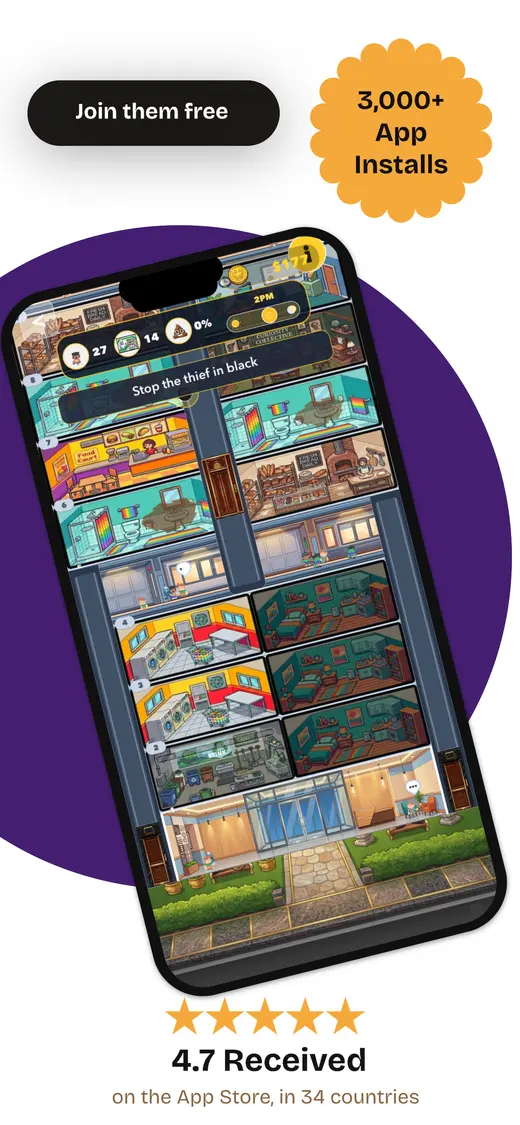
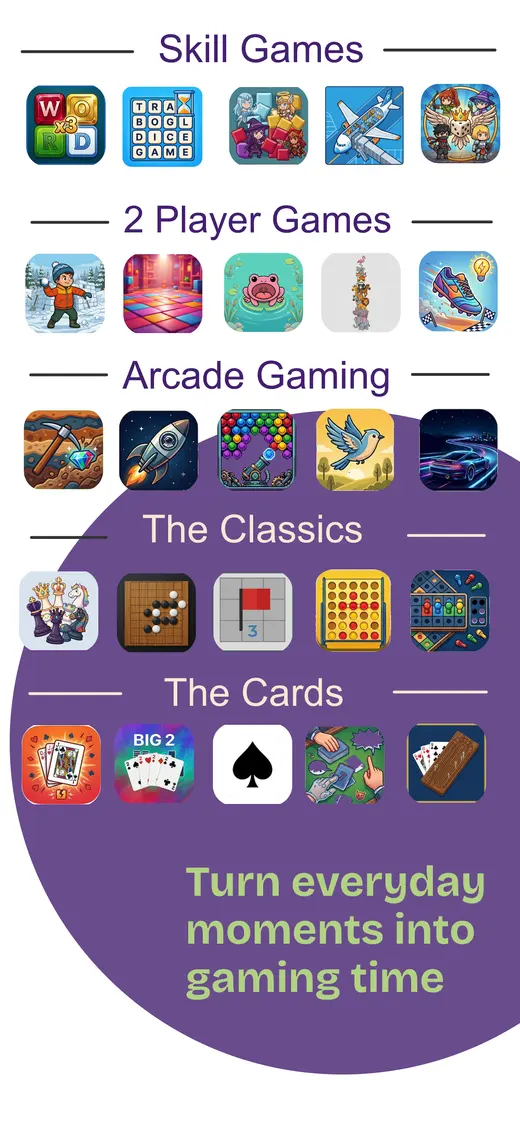
If the persistent schedule is what you dislike, a collection of self-contained games may fit better than another base. Fun Games for Flights is our iPhone app with short card, word, number, trivia, memory, reflex, and shared mini games.
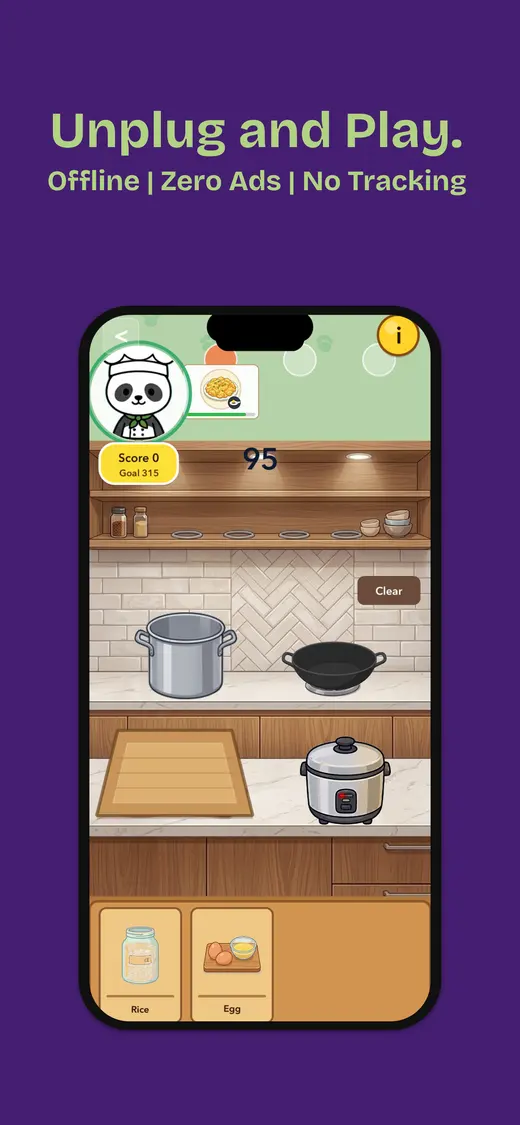
Its current App Store listing says the games work offline after installation and contain no ads. The activities are built for short sessions rather than protecting a settlement while you sleep.
- No ads
- Offline after installation
- Short, separate games
- Solo and shared play


The genre is not bad; the bargain can be
A base-building game can deliver careful planning, visible progress, and the quiet satisfaction of making a messy system work. The genre goes sour when those strengths become scaffolding for timers, premium currency, and obligations that keep reaching outside the game.
Before investing weeks in a settlement, ask what the game wants from you when you are not having fun. Does it let you change strategy, take a break, or simply stop? Or does every road lead back to the clock and the shop?
The answer tells you more than the size of the castle. A good game sells an experience worth returning to. It should not have to make leaving feel expensive.
Common questions
Before you start another upgrade
Why do base-building mobile games use timers?
Timers divide progress into return visits. They can create anticipation, but they can also make waiting the obstacle and sell premium currency as the shortcut.
Are all base-building mobile games pay to win?
No. The useful test is whether spending changes competitive power or mainly affects pace and appearance. A game can still feel unpleasant without being strictly pay to win.
Why do upgrades take longer later in the game?
Longer upgrades slow progression, extend the life of the content, and make speed-ups more valuable. That does not prove manipulation by itself, but the surrounding prompts and penalties matter.
How can I tell whether a mobile strategy game respects my time?
Check whether you can pause, make meaningful decisions without waiting, ignore daily rewards, understand the real cost of currency, and return after a break without a large penalty.
Is Fun Games for Flights a base-building game?
No. It is our collection of short card, word, puzzle, trivia, memory, reflex, and shared mini games. We mention it as a different fit for people who want self-contained offline play rather than a persistent base.
For the time you actually have