Mobile games explained• 9 min read
Pay-to-win games: what the term really means
A free download can still put a price on power. Here is how to tell what your money changes before the match begins.

The short answer
Pay-to-win games let players use real money to gain gameplay advantages that can affect competitive power, progression, or the chance of winning. A game is not automatically pay to win because it has in-app purchases. Cosmetics, extra story content, and some convenience purchases are different. The useful test is simple: can money buy power, access, or speed that changes the contest for everyone else?
“Free to download” describes the front door. It says very little about the furniture.
Some mobile games sell a costume and leave the rules alone. Others sell stronger characters, better equipment, extra attempts, or a way to skip the work that non-paying players must complete. Both may use the same free-to-play label, but they are not the same bargain.
The phrase pay to win is often used loosely, sometimes to mean “this game asked me for money.” That is understandable. Nobody enjoys a shop opening in the middle of a tutorial. But the more useful definition is narrower: payment changes the outcome or makes competition materially easier.
What pay-to-win games actually mean
Cambridge Dictionary defines pay to win as a system in which players can buy advantages. Academic work uses a similar idea: a pay-to-win product gives paying players a distinct functional benefit that increases the likelihood of winning, rather than merely changing appearance.
That functional part matters. A red sword skin is cosmetic. A red sword that does 30 percent more damage is power. A second attempt in a solo puzzle may be convenience. A second attempt in a ranked tournament can become a competitive advantage.
The label is therefore about the relationship between spending and the rules. It does not require every paying player to win every match. If paying substantially improves the odds, reduces the grind needed to reach competitive strength, or unlocks tools unavailable to non-paying players, many players will reasonably call the game pay to win.
The question is not “Can I technically play without paying?” The question is “What does paying change when another player and I are trying to win?”
Pay to win is not the same as every purchase model
Pay to play charges an upfront price to access the game. That can be a straightforward bargain: you pay once, then everyone who owns the game gets the same core rules.
Pay to progress sells speed or convenience. A purchase might shorten a timer, add inventory space, or remove repetition. In a solo game, that may be an optional shortcut. In a competitive game, the shortcut can become power when time is the resource that determines who reaches the strongest equipment first.
Cosmetic monetization sells appearance, animation, music, or other expression without changing strength. Cosmetics can still be expensive or irritatingly promoted, but they are not automatically pay to win.
Pay to participate is a different problem again. A game may lock a mode, character, or event behind a purchase without giving the buyer a direct advantage inside a shared match. Whether that feels fair depends on the promise of the game, but it should not be collapsed into one label.
Our explainer on why base-building mobile games can feel bad covers timers, grinding, and premium currency in more detail. Those mechanics can create pressure without always meeting the narrower definition of pay to win.

How mobile games sell the advantage
Pay-to-win systems rarely announce themselves with a button labelled Buy victory. The advantage is usually distributed across several ordinary-looking systems.
- Stats and equipment. Paid weapons, characters, cards, or upgrades are stronger than what a free player can reasonably earn at the same stage.
- Energy and attempts. Paying players get more tries, more lives, or more chances to enter a mode while everyone else waits.
- Time skips. A purchase removes a timer or accelerates construction, research, training, or loot collection. That becomes competitive when the race is persistent.
- Exclusive access. A paid pass or bundle grants a character, map, or ability that changes matchups rather than appearance.
- Resource scarcity. The free route is technically available but tuned around long, repetitive work, while spending restores a normal pace.
Research on mobile-game monetization has examined exactly this kind of waiting. In Pay to (Not) Play, the authors model games where players can pay to skip waits and explain how high prices and few buyers can coexist with a profitable system. The paper is a model, not a verdict on every game, but it helps explain why an expensive shortcut can still be strategically important even when most players never buy it.
Where gacha and random rewards fit
Gacha describes a random-reward mechanic: you spend a currency or ticket and receive one item from a pool, often with different rarity levels. That makes gacha different from pay to win as a category. One describes randomness; the other describes competitive effect.
A gacha system can be cosmetic-only. It can also sell powerful characters, equipment, or duplicate materials that improve a player's chances. When the strongest competitive tools are random, expensive, limited, or available only during a short event, the player is not simply buying a known item. They are buying attempts at a power curve.
A 2022 study in Frontiers in Psychology examined the relationship between pay-to-win gaming and gambling-related attitudes. It does not mean every random reward is gambling, and it does not diagnose individual players. It does show why the mechanics deserve separate attention: paid advantage and chance can overlap without being identical.
Do not use “gacha” as a shortcut for “bad.” Ask what the random items do, how much a player can spend, whether there is a clear path to earn them, and whether the game puts them into competition with people who bought more attempts.
How to spot pay-to-win games before you spend
You usually do not need to calculate every virtual currency bundle. Look for the relationship between money, power, and pressure.
- Read the store language. Phrases such as “powerful heroes,” “exclusive gear,” “boost your stats,” or “dominate the competition” tell you more than “free download.”
- Separate ranked play from solo play. A time-saver in a private campaign has a different effect from a time-saver in a shared ladder.
- Watch the first wall. Does the game introduce a purchase just as progress slows, attempts run out, or a stronger opponent appears?
- Compare the free route honestly. Can a non-paying player earn the same functional tools through normal play, or only after a schedule that makes competition impractical?
- Check random paid rewards. The cost of one pull is not the cost of obtaining the item you want. Look for odds, pity systems, duplicate protection, and spending limits.
- Test your stopping point. If the shop uses a loss, countdown, streak, or expiring offer to hurry you, close the store and decide later.
For family devices, pair this with our guide to mobile games for kids with no in-app purchases and our checklist for safe iOS games without ads. Purchase controls protect a budget; they do not tell you whether a game's competitive design is fair.
What a fairer alternative looks like
Fair monetization is not one exact business model. A paid game can be fair. A free game can be fair. A game with optional purchases can be fair if the player understands what money buys and the competitive rules do not quietly change for the highest spender.
Good signs include cosmetics sold directly, clear one-time expansions, meaningful free progression, transparent odds for random rewards, and multiplayer modes where paid items do not decide the result. None of these guarantees a good game. They simply give the player a bargain that can be described without a small legal team.
The strongest test is whether the game remains enjoyable when you decline the shop. If the free experience is a complete game and payment adds expression or optional content, the purchase is easier to evaluate. If the free experience is mostly an obstacle course designed to point at the purchase button, the issue is not just that the game has a store. The store has become the game's main character.
Our app · Fun Games for Flights
A different fit for short, self-contained play.
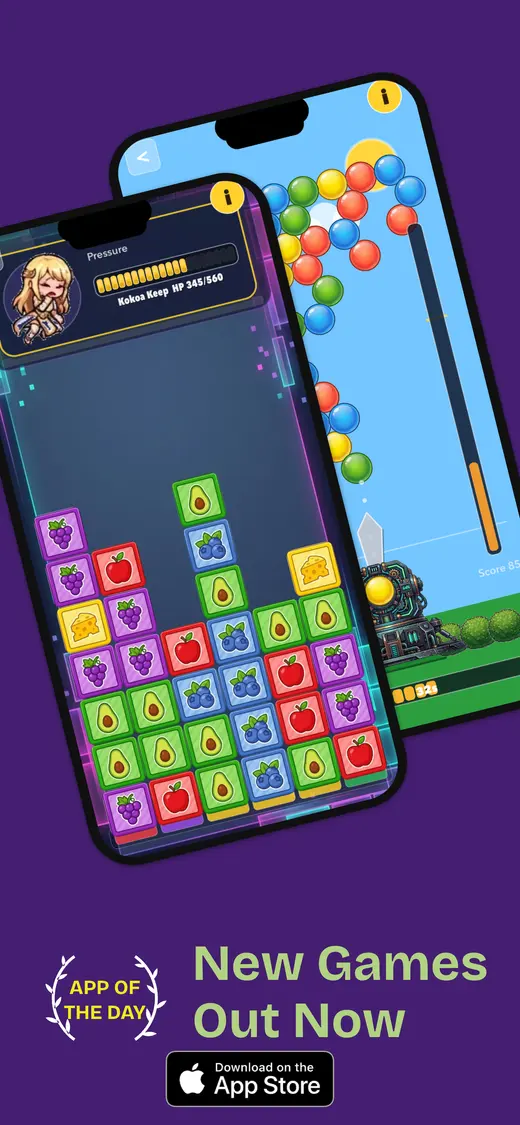
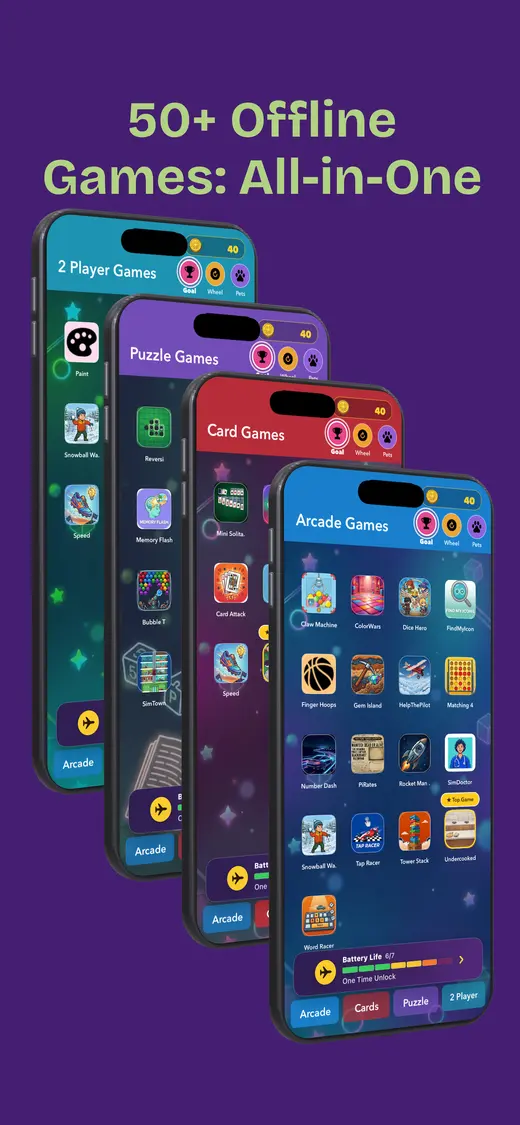
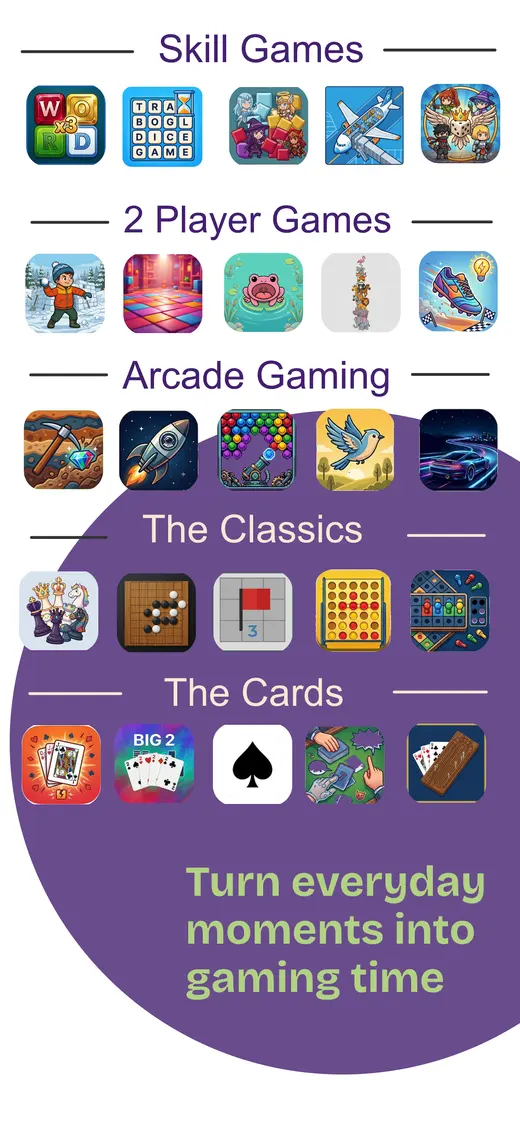
If what you want is a game you can open, play, and put down without entering a competitive spending race, Fun Games for Flights is our iPhone app with short card, word, number, trivia, memory, reflex, pass-and-play, and family-friendly mini games.
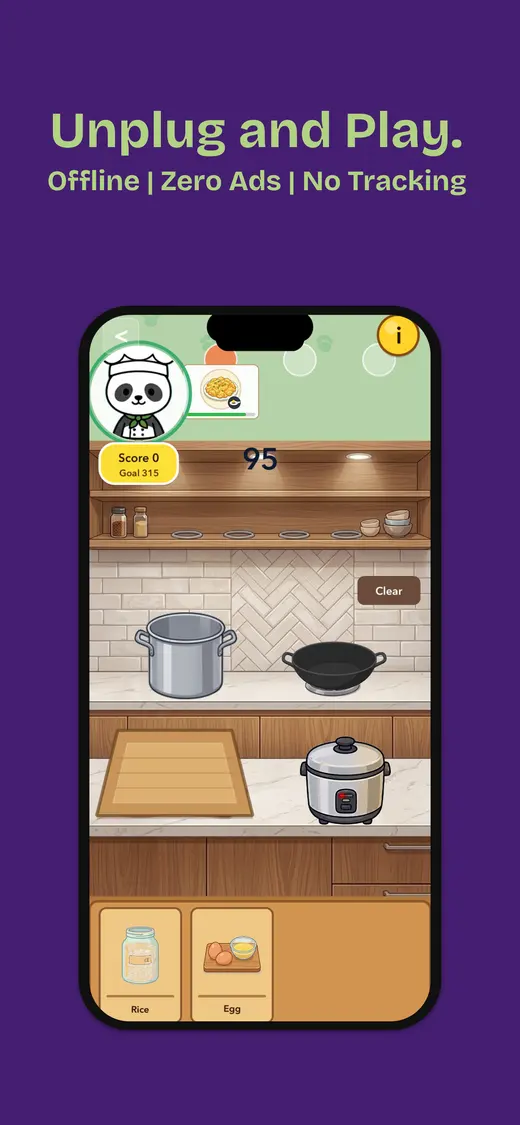
The current App Store listing says it works without internet after installation and contains no ads. It is free with optional in-app purchases. We are mentioning it as a different fit for offline downtime, not as proof that every purchase model is the same.
- Short self-contained games
- Works offline after installation
- No ads
- Solo and shared play
The useful question is what your money buys
“Pay to win” is a blunt phrase, but it points at a real difference. A game may ask for money without selling victory. It may sell convenience without corrupting a shared contest. It may use random rewards without giving them competitive power. The label becomes useful when you connect the purchase to the rule it changes.
Before installing a new free-to-play game, ask three questions: what can money buy, who benefits from it, and what does the free player have to do instead? If the answers are clear, you can decide whether the bargain suits you. If they are hidden behind a shop, a timer, and a suspiciously urgent offer, that is information too.
Games should make losing feel like a reason to learn, not a reason to open your wallet.
Common questions
Pay-to-win games FAQ
What are pay-to-win games?
Pay-to-win games let players exchange real money for gameplay advantages that can affect competitive power, progression, or the likelihood of winning. The label is about what payment changes, not simply whether a game has purchases.
Are all free-to-play games pay to win?
No. A free-to-play game can sell cosmetics, extra story content, convenience, or optional expansions without selling an advantage over another player. The practical question is whether money changes the competitive rules or the free player's ability to keep up.
Is paying to progress the same as pay to win?
Not always. Paying to skip a wait in a solo game may be pay to progress or pay for convenience. It becomes pay to win when the shortcut affects competitive outcomes, ranking, access to power, or the ability to compete on reasonable terms.
Are gacha games automatically pay to win?
No. Gacha describes a random-reward system, not the complete competitive effect. A gacha game may sell cosmetics, characters, power, or a mixture. Check whether random purchases create advantages and whether non-paying players can realistically compete.
How can I avoid pay-to-win mobile games?
Read the store listing and inspect the first sessions for power bundles, energy limits, stat boosts, ranked advantages, and random paid rewards. If the game has competition, compare what paying and non-paying players can access, then stop before spending if the rules remain unclear.
Spend on the experience